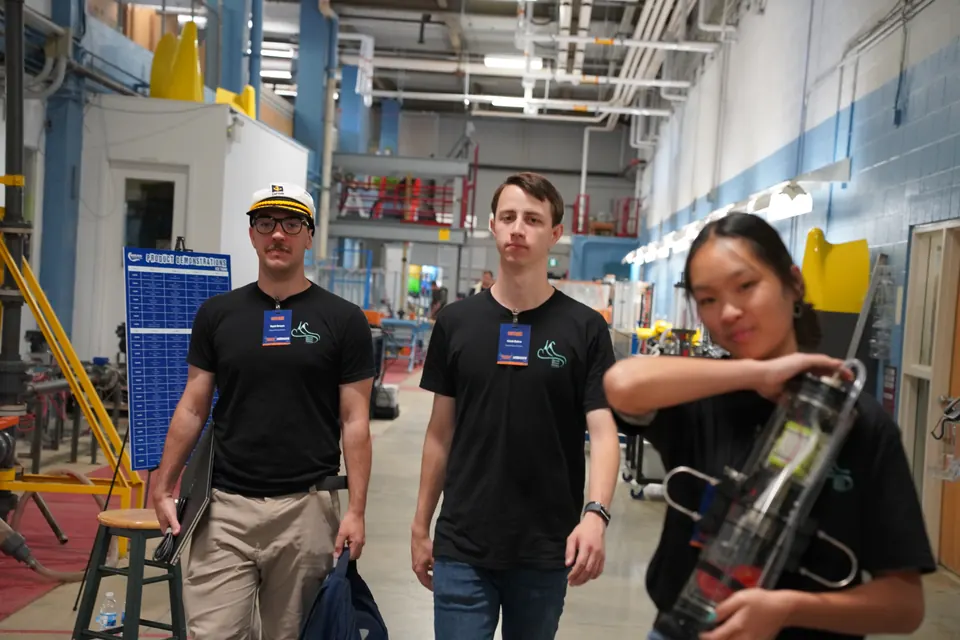
Seals that survive the cold
Custom-machined end caps use internal O-rings. The team researched thermal expansion so the seals hold across the temperature swing from a warm deck to cold water.
Profiling float · 2026
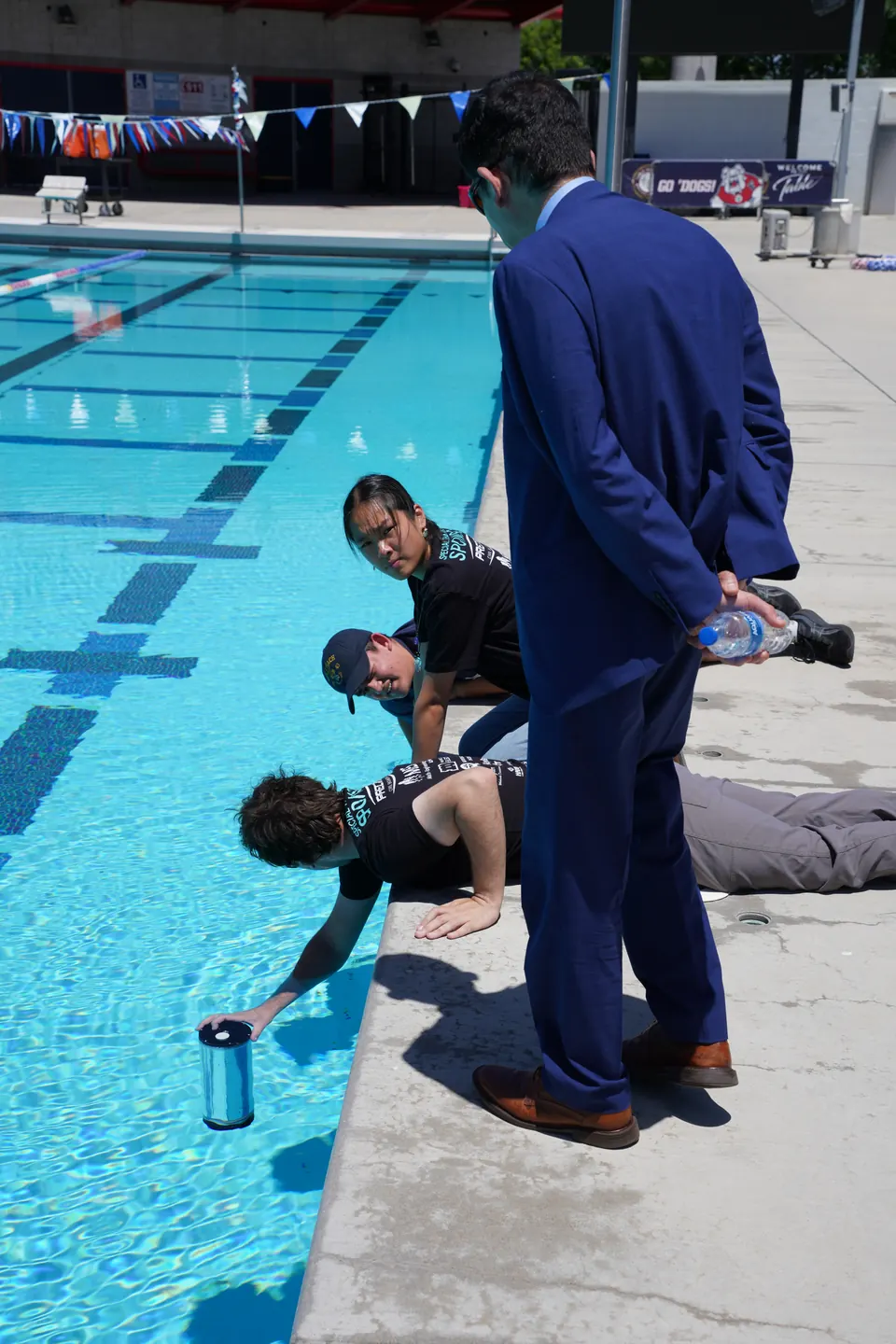
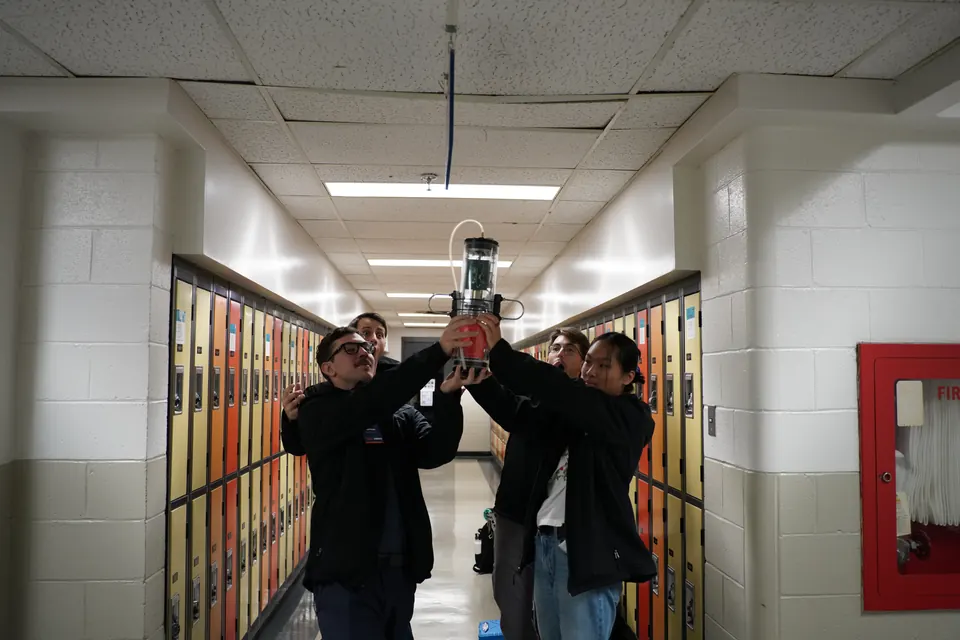
Aquatic Drifter for Autonomous Monitoring. It sinks and rises on its own, logging depth on the way, like the floats that measure the ocean's health.
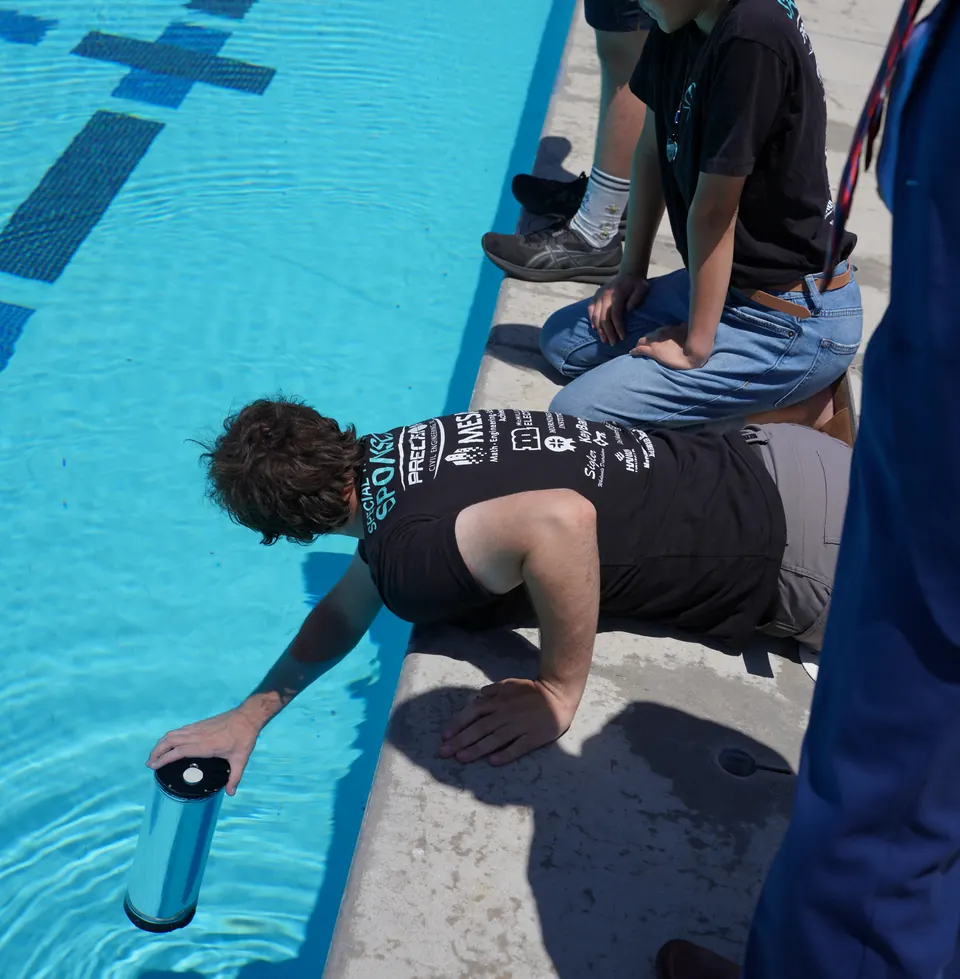
How it works
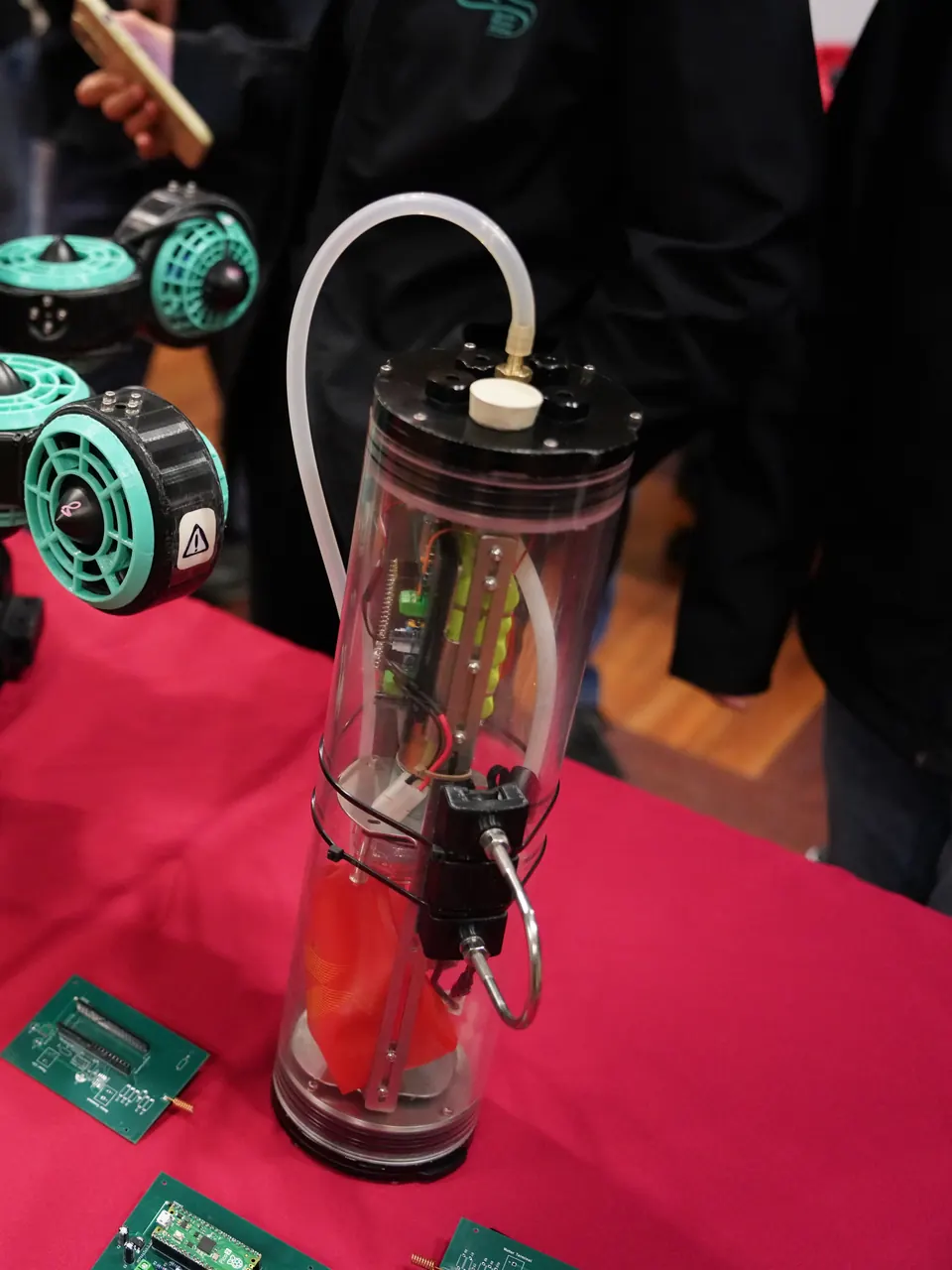
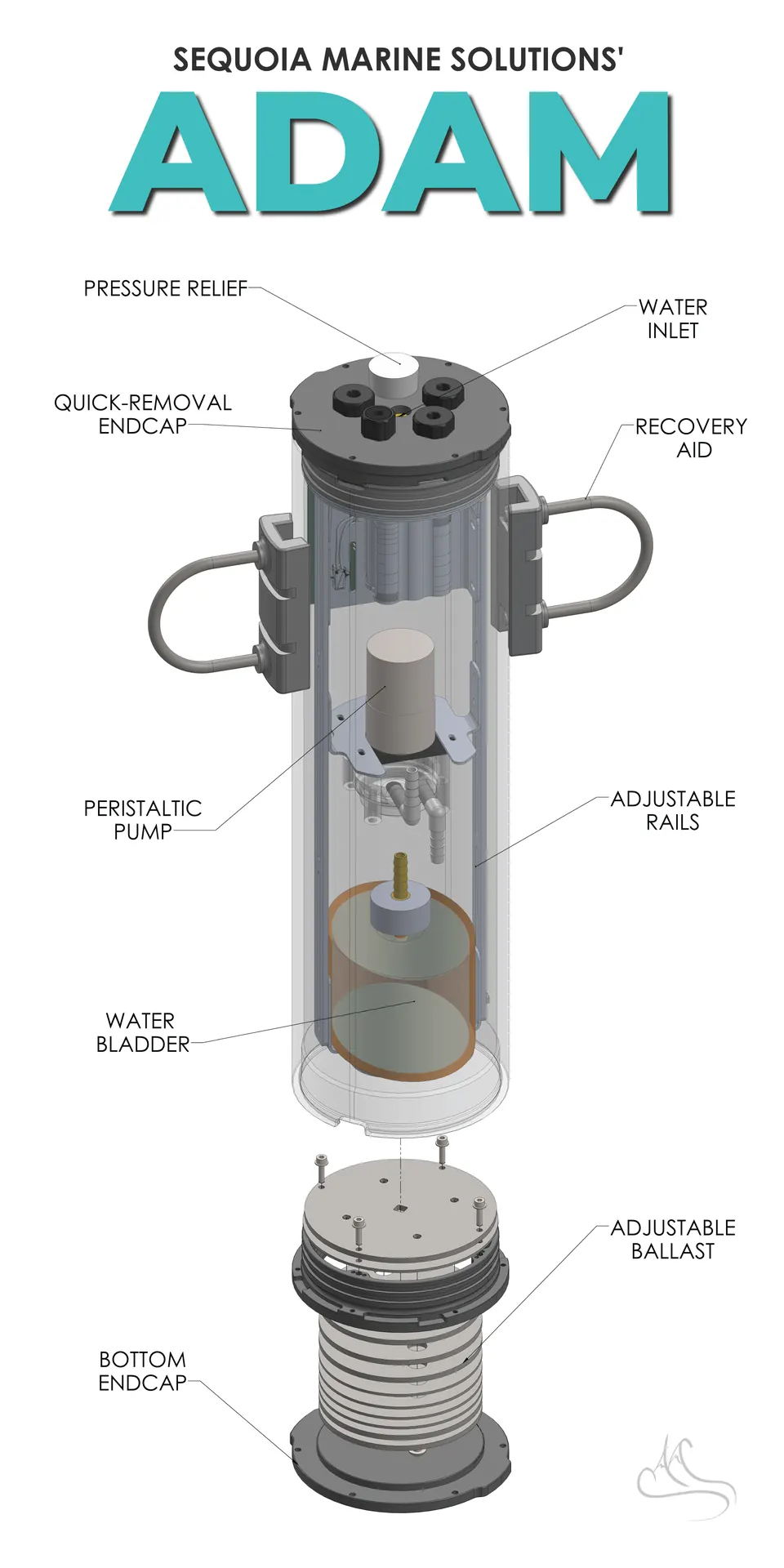
A peristaltic pump moves water in and out of an internal bladder, changing ADAM's density so it can complete vertical profiles without a tether.
In 3D
ADAM's float CAD: end caps, recovery handles and the rails that carry the pump and electronics. Drag to orbit, pinch or scroll to zoom.

Custom-machined end caps use internal O-rings. The team researched thermal expansion so the seals hold across the temperature swing from a warm deck to cold water.
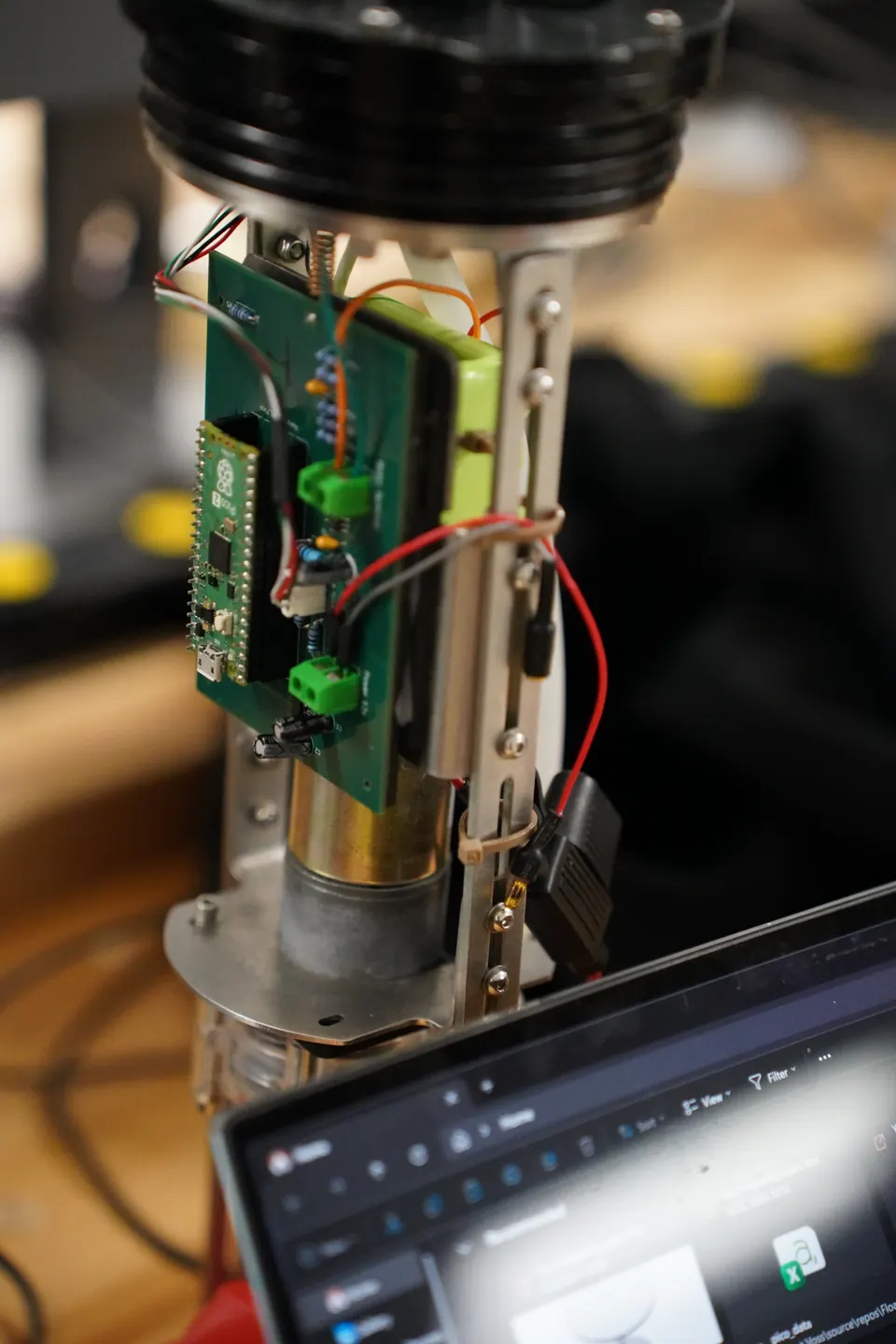
An independent NiMH pack with its own regulation feeds the logic and the pump separately, so motor noise doesn't corrupt the depth readings.
A LoRa module sends telemetry to the surface from a custom PCB built around a Raspberry Pi Pico running MicroPython.